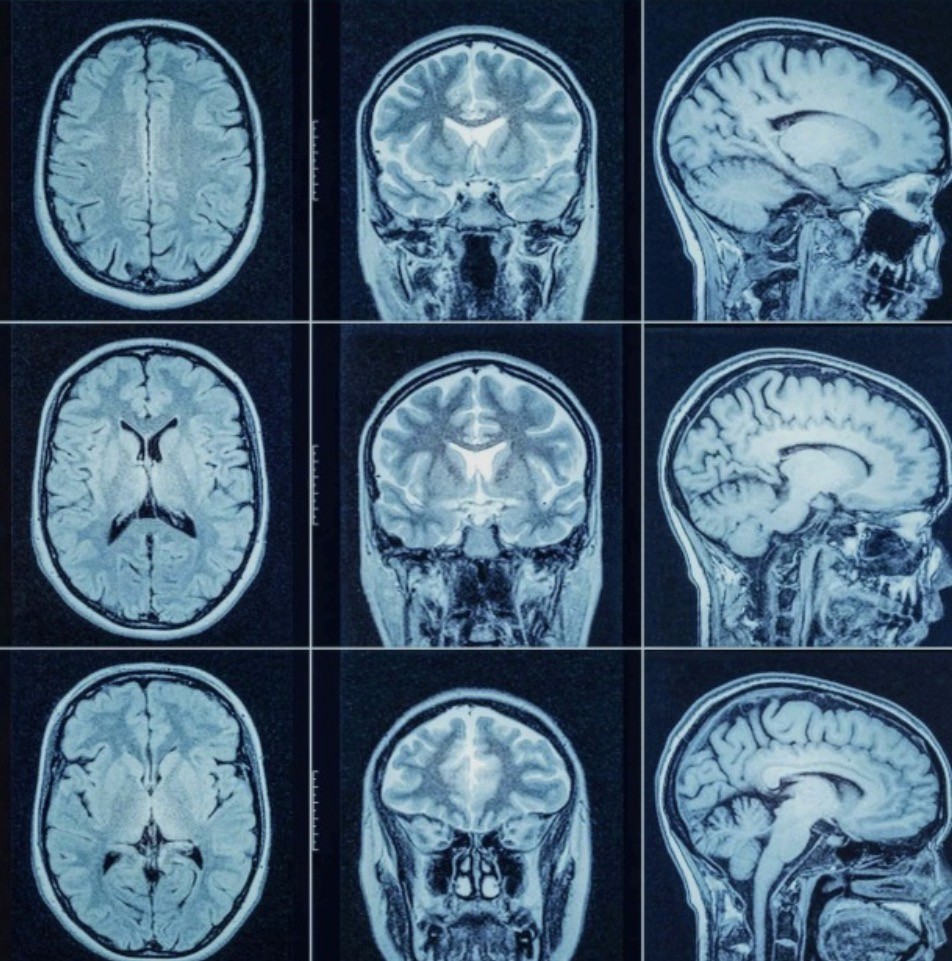
Depression is often described as though there is something specific in the brain that has gone wrong. We might hear about changes in serotonin or dopamine, or about abnormalities in particular brain regions involved in emotion and motivation. These explanations have helped scientists understand depression, but they can also make the disorder seem simpler than it really is. Major depressive disorder (MDD), the clinical condition commonly referred to as depression, can involve many different symptoms and biological changes, and these changes can look different from person to person.
For example, one person with depression might experience a major loss of interest or pleasure, while another might struggle more with motivation, negative emotions, or changes in sleep. Researchers have also found that different brain circuits, groups of interconnected brain regions that work together to perform particular functions, can be involved in these symptoms. If depression involves so many different systems, however, how do they fit together?
In a 2026 review published in Neuron, researchers Zhengwei Yuan, Jing Quan, Yuting Cui, and Minmin Luo propose a different way of thinking about this question. Rather than treating depression as a problem that can be traced back to one particular brain circuit, they describe MDD as a dynamic system involving many interacting circuits. In their framework, changes in these interactions can make depressive patterns of brain activity increasingly stable, making it more difficult for the brain to move away from them. The researchers describe this idea using the concept of a pathological attractor.
The question is not only which circuit is involved, but how the brain’s systems work together to maintain a depressive state.
Depression is more than a single broken circuit
Researchers have spent decades investigating the brain circuits involved in depression. The prefrontal cortex, a region at the front of the brain involved in processes such as decision-making, emotional regulation, and cognitive control, is one important part of this research. Other regions, including the amygdala, which helps process emotional information, and the nucleus accumbens, which is involved in reward and motivation, have also been linked to depression. Researchers have studied the ventral tegmental area (VTA), a brain region involved in dopamine signaling, as well as the lateral habenula, which is involved in processing negative outcomes and regulating other brain systems. These findings do not mean that any one of these regions is the “depression center” of the brain. In fact, Yuan and colleagues argue that looking at these circuits separately may be part of the problem. Brain regions constantly communicate with one another, meaning that changing activity in one circuit can affect activity elsewhere.
For example, researchers have found that manipulating individual circuits can produce different effects depending on the state of the rest of the brain. These are known as context-dependent effects, meaning that the effect of a particular circuit can change depending on the circumstances surrounding it. Some effects can even be bidirectional, meaning that changing the same circuit can produce different outcomes in different circumstances. This suggests that the role of a circuit cannot always be understood in isolation. Instead, researchers may need to look at how multiple circuits interact and how those interactions change over time. In other words, rather than asking only which part of the brain is involved in depression, we can also ask how the brain’s different parts work together to create and maintain a depressive state.
The brain is constantly changing
To understand this idea, it helps to think about the brain as a system that is constantly changing. Our brains are not static structures. Neurons communicate with one another, different brain regions influence each other, and chemical messengers called neuromodulators can change how strongly groups of neurons respond to incoming signals. Experiences can also change the connections between neurons. This ability of the brain to change in response to experiences is called neuroplasticity. Neuroplasticity is essential to everyday life. It allows us to learn new skills, form memories, and adapt to our surroundings. However, the same ability to change can sometimes reinforce patterns that are not beneficial.
The authors describe this possibility as maladaptive neuroplasticity. “Maladaptive” simply means that something is adapting in a way that is ultimately harmful rather than helpful. Instead of a stressful experience producing a temporary change in the brain that disappears once the stress is gone, repeated stress or other risk factors may contribute to longer-lasting changes in how neural circuits communicate. Genetics can also influence this process. Depression is polygenic, meaning that vulnerability to the disorder can be influenced by many different genetic variations rather than one single “depression gene.” These genetic factors do not determine whether someone will develop depression on their own, but they can influence how vulnerable a person’s brain may be to environmental stress and other experiences. The authors propose that these different influences can interact, gradually changing the way the brain’s networks operate. This brings us to one of the central concepts of their framework: the pathological attractor.
What is an attractor?
Imagine putting a ball inside a bowl. If you place the ball somewhere along the side of the bowl, gravity will pull it downward until it eventually settles at the bottom. The bottom of the bowl is a stable state that the system naturally tends toward. In dynamical systems, a branch of science and mathematics that studies how systems change over time, a stable state like this can be called an attractor. An attractor is essentially a pattern or state that a system tends to settle into. Now imagine changing the shape of the bowl. If the bottom becomes deeper, the ball will be more strongly pulled toward it, and it will require more force to move the ball out of the depression.
Yuan and colleagues propose that something similar could happen within the brain. Instead of imagining depression as one broken part, we can imagine the brain as having a constantly changing landscape of possible states. If interactions among brain circuits change in ways that reinforce depressive patterns, those patterns may become increasingly stable. The authors call this a pathological attractor. “Pathological” means associated with disease or dysfunction, so a pathological attractor is a stable state of a system that contributes to an unhealthy condition. Importantly, this does not mean that scientists have discovered a literal depression-shaped hole in the brain. The attractor is a theoretical concept used to describe how patterns of neural activity might become stable and self-reinforcing. The authors are proposing this framework based on existing evidence from neuroscience rather than reporting a single experiment that directly proves that depression is a pathological attractor.
How could a depressive state become so stable?
The researchers describe depression as involving interactions between many different parts of the brain. One particularly important relationship is between the prefrontal cortex and several subcortical regions, meaning brain structures located underneath the cerebral cortex. The prefrontal cortex provides what researchers call top-down control. This means that higher-level brain regions can influence the activity of lower-level regions involved in processes such as emotion, reward, and motivation. Several subcortical regions act as important hubs, meaning that they communicate with many other parts of the brain and can therefore influence activity across larger networks.
According to the framework proposed by Yuan and colleagues, disruptions in these relationships may contribute to the stabilization of maladaptive patterns. One example is anhedonia, a reduced ability to experience pleasure or interest in things that would normally feel rewarding. Rather than thinking of anhedonia as being caused by one isolated “pleasure circuit,” the authors describe it as something that can emerge from changes across interacting systems involved in reward and motivation. The same general idea applies to other symptoms of depression. Emotional processing, motivation, reward, and cognitive control do not occur in completely separate parts of the brain. They are connected through networks that continuously influence one another. Changes in one part of this system can therefore affect the activity of others, potentially reinforcing the overall depressive state.
Why might the brain keep returning to the same state?
The attractor framework offers one possible explanation for why depression can persist or return even after symptoms improve. If repeated experiences and changes in neuroplasticity alter the relationships between brain circuits, those changes may make certain patterns of activity increasingly stable. In the bowl analogy, it is as though the shape of the landscape has changed. The ball can still move, but the forces acting on it make one particular state easier to return to. This does not mean that a person with depression is incapable of feeling happiness. Someone can experience positive emotions, enjoy time with friends, or have periods when their symptoms improve while still having depression. The framework is instead describing a tendency in the underlying brain system: depressive patterns may become easier to enter or maintain than they were before.
This could also help explain why depression can recur. If treatment reduces symptoms without completely changing the network dynamics that helped maintain the depressive state, the brain may remain vulnerable to returning to similar patterns later. The authors therefore suggest that understanding depression requires looking not only at the symptoms themselves, but also at the processes that make particular brain states stable.
Could we change the shape of the landscape?
If depression involves a problem with the way brain networks are organized and stabilized, this could change the way researchers think about treatment. Rather than targeting one molecule or one brain region in isolation, future treatments could aim to change the network dynamics that keep a depressive state stable. Precision neuromodulation, for example, refers to techniques that deliberately alter the activity of specific neural circuits using methods such as electrical or magnetic stimulation. The authors also discuss the possibility of circuit fingerprinting. A circuit fingerprint would be an individual’s particular pattern of neural activity or connectivity, the way their brain circuits communicate with one another. Since depression is biologically heterogeneous, meaning that its underlying mechanisms can differ between people, identifying these individual patterns could eventually help researchers develop more personalized treatments.
Another possibility is a closed-loop system. In a closed-loop treatment, the system continuously measures some feature of brain activity and uses that information to adjust the treatment in response. Instead of giving exactly the same stimulation regardless of what the brain is doing, a closed-loop system could theoretically detect a particular neural state and respond accordingly. These ideas are still areas of research rather than established solutions to depression. The value of the pathological-attractor framework is that it gives researchers a way to think about what those future treatments might need to accomplish: not simply changing one isolated component, but potentially helping the brain move from one network state to another.
A framework, not a final answer
There is an important limitation to keep in mind when interpreting this research. Yuan and colleagues are presenting a review and conceptual framework. A review brings together findings from many previous studies rather than presenting one new experiment. The authors use evidence from animal and human research to develop their model of how depression might operate as a dynamic network disorder. This means that the pathological-attractor framework should not be interpreted as a final explanation for every case of depression. Depression is highly heterogeneous, meaning that different people can develop similar symptoms through different combinations of biological and environmental factors.
Animal research also cannot automatically be translated into human depression. Experiments in animals allow researchers to manipulate individual neural circuits in ways that would be difficult or impossible to perform in humans. This makes them extremely useful for understanding mechanisms, but a change in a rodent’s behavior cannot automatically be treated as equivalent to the complex experience of human depression. Most importantly, the framework has not yet been fully translated into clinical psychiatry. The authors’ discussion of personalized circuit fingerprints, closed-loop treatments, and network-level interventions represents potential future directions rather than treatments that have already been proven to work.
Changing how we think about depression
Our understanding of psychiatric disorders has changed considerably as neuroscience has developed. Depression has been studied through the lens of neurotransmitters, individual brain regions, neural circuits, genetics, stress, and many other biological processes. Each of these perspectives has contributed to our understanding of the disorder, but none completely explains why depression can be so persistent, variable, and difficult to treat. The framework proposed by Yuan and colleagues adds another way of looking at the problem. Instead of asking only which circuit is responsible for a symptom, it asks how many different circuits interact with one another and how those interactions change over time.
The difference may seem subtle, but it changes the question researchers are trying to answer. If depression is partly a disorder of network dynamics, then treating it may eventually require more than finding one broken component and repairing it. Researchers may instead need to understand the shape of the entire system: what pushes the brain toward a depressive state, what keeps it there, and what could help it move somewhere else. The brain, in this framework, is less like a machine with one broken part and more like a landscape that can change shape. And if that landscape can be changed, understanding how it became distorted in the first place may be an important step toward finding ways to reshape it.
Research basis: Yuan, Z., Quan, J., Cui, Y., & Luo, M. “A circuit-based framework for depression: Reshaping the pathological attractor.” Neuron 114, 2691–2723 (2026). DOI: 10.1016/j.neuron.2026.04.009. Review and conceptual framework.