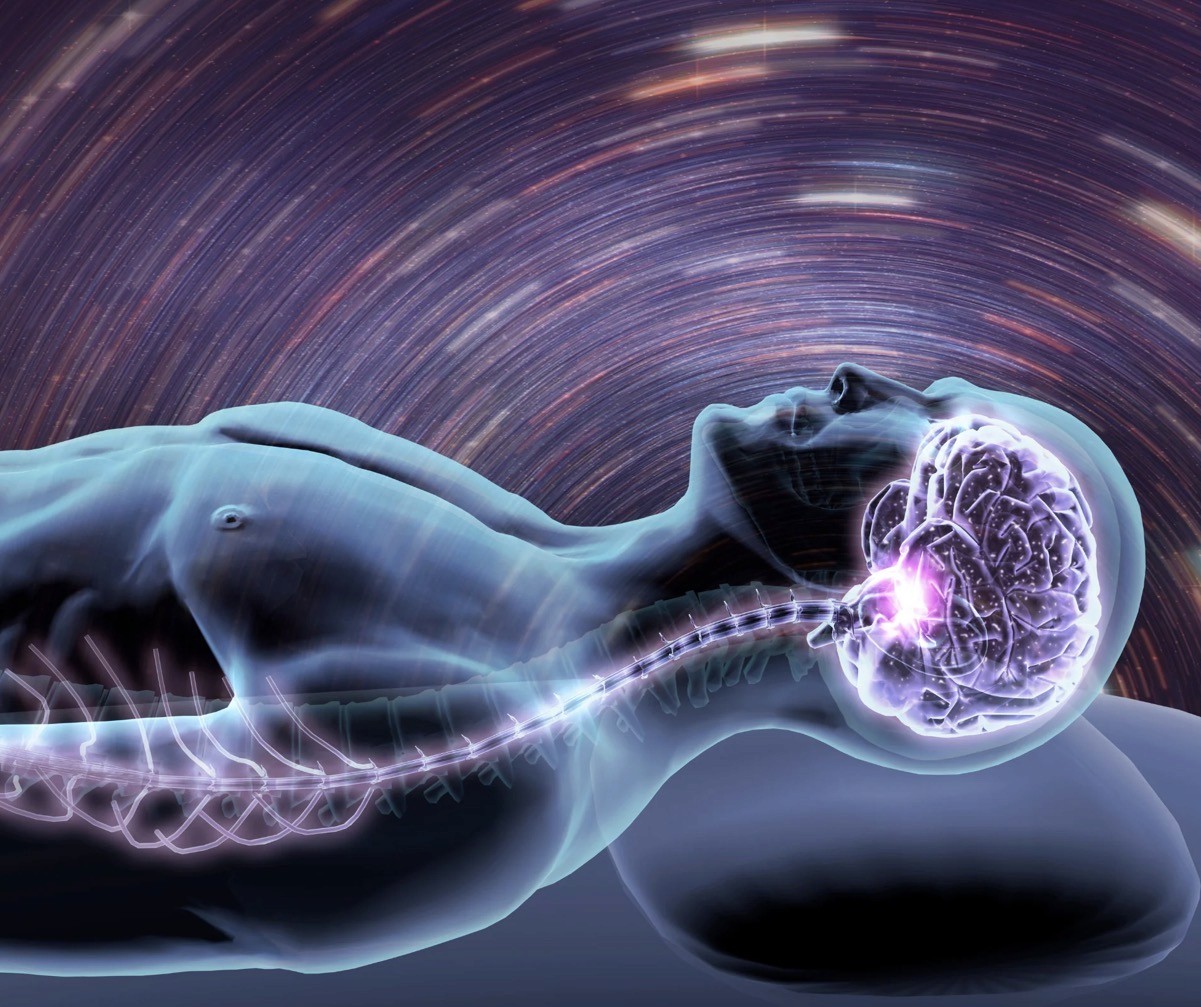
Imagine learning a new dance routine. You spend an hour practicing the sequence, trying to remember which movement comes next and how each step connects to the one before it. Eventually, you stop practicing and go to sleep. The next day, when you try the routine again, something feels different. The sequence is a little more familiar, and movements that felt awkward the day before seem easier to perform.
Something similar can happen when learning a new route. You drive to a new workplace for the first time, paying close attention to each turn. After sleeping, you may find that the route feels more familiar even though you have not consciously practiced it again. While you were resting, your brain was not simply switched off. It was continuing to process information from what you had learned.
One way researchers study this process is through replay, the reactivation of patterns of neural activity associated with a previous experience. Replay can occur during periods of rest or sleep, after the original learning experience has ended. Researchers think that this kind of offline reactivation may contribute to memory consolidation, the process through which a newly learned memory becomes more stable and lasting over time. But the brain structures responsible for this process may depend on exactly what kind of memory is being formed.
A new study in Nature Neuroscience investigated this question by looking at procedural memory, the type of memory involved in learning skills and sequences of actions. The researchers found that a brain region involved in procedural learning could continue replaying a learned sequence even after the hippocampus, one of the brain’s most important memory structures, had been removed. The finding suggests that the brain may have more than one way of consolidating what we learn.
Not all memories are built the same way
It is easy to think of memory as one general ability, but neuroscientists divide memory into several different forms. Remembering what you ate for breakfast is different from remembering how to ride a bicycle, even though both involve information that your brain has stored.
The first is an example of declarative memory, which includes facts, information, and events that can be consciously recalled. Remembering someone’s name, recalling what you wore yesterday, or knowing the capital of France all involve declarative memory. Procedural memory, by contrast, involves learning how to perform a skill or sequence of actions. Once you have learned how to ride a bike or perform a familiar dance routine, you generally do not need to consciously recall every individual step before carrying it out.
These different forms of memory rely on partly different neural systems. The hippocampus is particularly well known for its role in declarative memory and has long been associated with the consolidation of newly formed memories. The dorsolateral striatum, or DLS, is another brain region that plays an important role in procedural learning and the development of skills and habits.
The distinction becomes important because researchers had observed that the hippocampus can be active during the consolidation of procedural memories as well. If the hippocampus is involved while a procedural memory is being consolidated, it raises a question that is more specific than simply asking whether the hippocampus “helps” with memory: is the hippocampus actually necessary for the replay of a procedural memory elsewhere in the brain?
What happens to a memory after learning?
To understand why that question matters, it helps to look at what happens after learning itself has finished. When an animal learns a sequence of actions, particular patterns of neurons become active as it moves through that sequence. Later, when the animal is resting and no longer performing the task, researchers can sometimes observe similar patterns of neural activity appearing again.
This is replay. Rather than representing a new experience, the brain is reactivating a pattern associated with something that happened earlier. Because replay often occurs during periods when the animal is no longer actively performing the task, researchers describe it as a form of offline reactivation. The timing is important because memory consolidation takes place after learning, when the brain is stabilizing information that has only recently been acquired.
Replay has been observed in several brain regions and has been associated with different aspects of learning. In some cases, neural sequences can be replayed in the same order in which they originally occurred. In others, they can appear in reverse. The sequence can also be compressed, meaning that a pattern representing an experience that originally took several seconds can reappear through neural activity over a much shorter period.
These observations raise a larger question about how different memory systems communicate. Because the hippocampus is so strongly associated with memory consolidation, one possibility is that it helps coordinate replay across other parts of the brain. But if that were necessary for procedural-memory replay, removing the hippocampus should interfere with the replay occurring in the DLS.
Thompson and colleagues designed an experiment to find out.
A sequence of five nose pokes
The researchers trained mice to perform a sequence of nose pokes across five different ports. As the animals learned the task, the researchers recorded activity from neurons in the DLS, allowing them to examine the patterns of activity associated with the learned sequence.
The researchers were particularly interested in what happened after the mice stopped performing the task. During periods of rest, patterns of activity representing parts of the learned sequence reappeared in the DLS. The mice were no longer actively performing the behavior, yet their brains were showing patterns associated with what they had just learned.
The researchers could therefore examine not only whether replay occurred, but also what the replay looked like. They found that replay preferentially represented salient behavioral events, rather than simply reproducing every part of the experience equally. Replay also occurred in both forward and reverse sequences and showed compressed timing. These characteristics suggested that the DLS was not simply producing random neural activity after learning. It was reactivating structured representations of the experience.
But there was still a problem with interpreting what the hippocampus was doing. The fact that the hippocampus was active during this period did not necessarily mean that it was required for the DLS to replay the learned sequence. To distinguish between those possibilities, the researchers needed to remove the hippocampus from the equation.
Replay without the hippocampus
The researchers created complete bilateral hippocampal lesions, meaning that hippocampal tissue on both sides of the brain was removed or destroyed. They could then examine whether the patterns of replay that had been observed in the DLS were still present.
They were.
Even after the hippocampal lesions, the researchers continued to observe replay of the learned procedural sequences in the DLS. The important finding was therefore not simply that the mice could still perform the nose-poke task. Their brains were still showing organized reactivation of the learned sequence even without the hippocampus.
This provides evidence that hippocampal activity is not necessary for this particular form of DLS replay. The DLS appears capable of continuing to reactivate the procedural memory independently of the hippocampus.
The characteristics of the replay also remained. Salient parts of the learned experience continued to receive preferential representation, and the researchers continued to observe forward and reverse replay with compressed timing. The loss of the hippocampus therefore did not simply eliminate replay or reduce it to unstructured activity. The DLS retained many of the same features of replay that had been observed before the lesions.
This result challenges the idea that the hippocampus must coordinate every form of memory replay throughout the brain. Instead, at least some neural systems involved in procedural memory appear to have their own capacity to continue processing a learned experience.
But does replay actually improve memory?
The researchers also found a relationship between replay and the animals’ later performance. Characteristics of the DLS replay were associated with subsequent improvements in how well the mice performed the learned sequence. In other words, examining what was replayed could provide information about how much the animals’ performance would improve afterward.
That finding is consistent with the idea that replay contributes to memory consolidation, but there is an important distinction between prediction and causation. If two things occur together, one does not necessarily cause the other. In this study, replay predicted later performance, but the researchers did not selectively eliminate replay itself and observe whether the performance improvement disappeared.
A stronger test of causation would require disrupting replay while leaving the rest of the memory system intact. If doing so prevented the expected improvement, that would provide stronger evidence that replay itself was responsible. The current study does not establish that relationship.
This distinction is important because it limits what the experiment can tell us. The findings show that replay is associated with later performance and that it can continue without the hippocampus. They do not yet explain exactly what replay accomplishes or whether replay itself is the mechanism responsible for strengthening the memory.
The hippocampus is not irrelevant
It would be easy to interpret these findings as meaning that the hippocampus has nothing to do with procedural memory. That would be too broad.
The hippocampus can still be active during procedural-memory consolidation, and it may contribute to other parts of the learning process that were not tested here. The study answers a more specific question: DLS replay of this particular procedural memory can occur without the hippocampus.
That distinction reflects a broader principle in neuroscience. A brain region can participate in a process without being strictly necessary for every part of that process. The hippocampus may interact with the DLS and other brain regions during consolidation while the DLS retains the ability to carry out certain forms of replay independently.
This also helps explain why it is difficult to describe memory as something that simply gets “stored” in one place. Different types of memories depend on different neural systems, and those systems can interact without being completely dependent on one another.
Procedural memory may therefore have its own route through the consolidation process. The hippocampus can be active, but the DLS does not necessarily need it in order to replay a learned sequence.
One experiment cannot explain every procedural memory
There are still important limits to the study. The first is that the experiment was performed in mice, so it remains unknown whether the same mechanism operates in humans. A mouse learning a sequence of nose pokes is also a very specific example of procedural learning. We cannot assume that learning every kind of skill depends on exactly the same neural mechanisms.
The study also does not establish that the hippocampus is unnecessary for procedural memory in general. It shows that the DLS can continue replaying this particular learned sequence after complete hippocampal lesions. Other procedural memories could involve different interactions between the hippocampus and other brain regions.
Finally, the study does not establish that replay causes improvements in performance. The relationship between replay and later performance is important, but demonstrating causation would require directly manipulating replay itself.
These limitations do not make the finding less useful. Instead, they define what the researchers have actually learned. The study gives us evidence for a specific kind of independence between the hippocampus and DLS during procedural-memory replay, while leaving open questions about how widespread that independence is and exactly what replay does for the memory.
Memory is not one process
The brain does not appear to consolidate every kind of memory in exactly the same way. Remembering a fact, recalling an event, and learning a physical skill involve different kinds of information, and the neural systems responsible for processing them can differ as well.
This study adds another piece to that picture. The hippocampus is one of the brain’s most important memory structures, but its importance does not mean that every form of memory replay depends on it. In the case of this procedural task, the DLS was able to continue replaying the learned sequence even after the hippocampus had been removed.
That finding suggests that memory consolidation is not one centralized process happening in one part of the brain. Instead, different neural systems may have their own mechanisms for processing and stabilizing what we learn, while still interacting with one another.
So when a dance routine feels easier the morning after you practiced it, the brain may have been doing more than simply resting. While you were asleep, patterns associated with what you learned may have been replayed and reorganized by neural systems involved in the skill.
And in at least some forms of procedural learning, that process can continue even without the hippocampus.
Memory is not one process controlled by one brain region. It is a collection of interacting systems, and different kinds of learning may have their own ways of becoming more stable over time.